
Repair guide
Sub-Zero Sealed System Failure: Signs, Causes, and What to Do
How to recognize a Sub-Zero sealed system failure, what causes refrigerant leaks and compressor faults, and why this repair requires EPA-certified service.
A sealed system failure means the refrigerant circuit that actually makes your Sub-Zero cold, the compressor, condenser, evaporator, and connecting lines, has stopped working correctly, usually from a refrigerant leak, a compressor fault, or a blockage. The classic sign is a unit that runs constantly but cannot get cold, often with the freezer warming first.
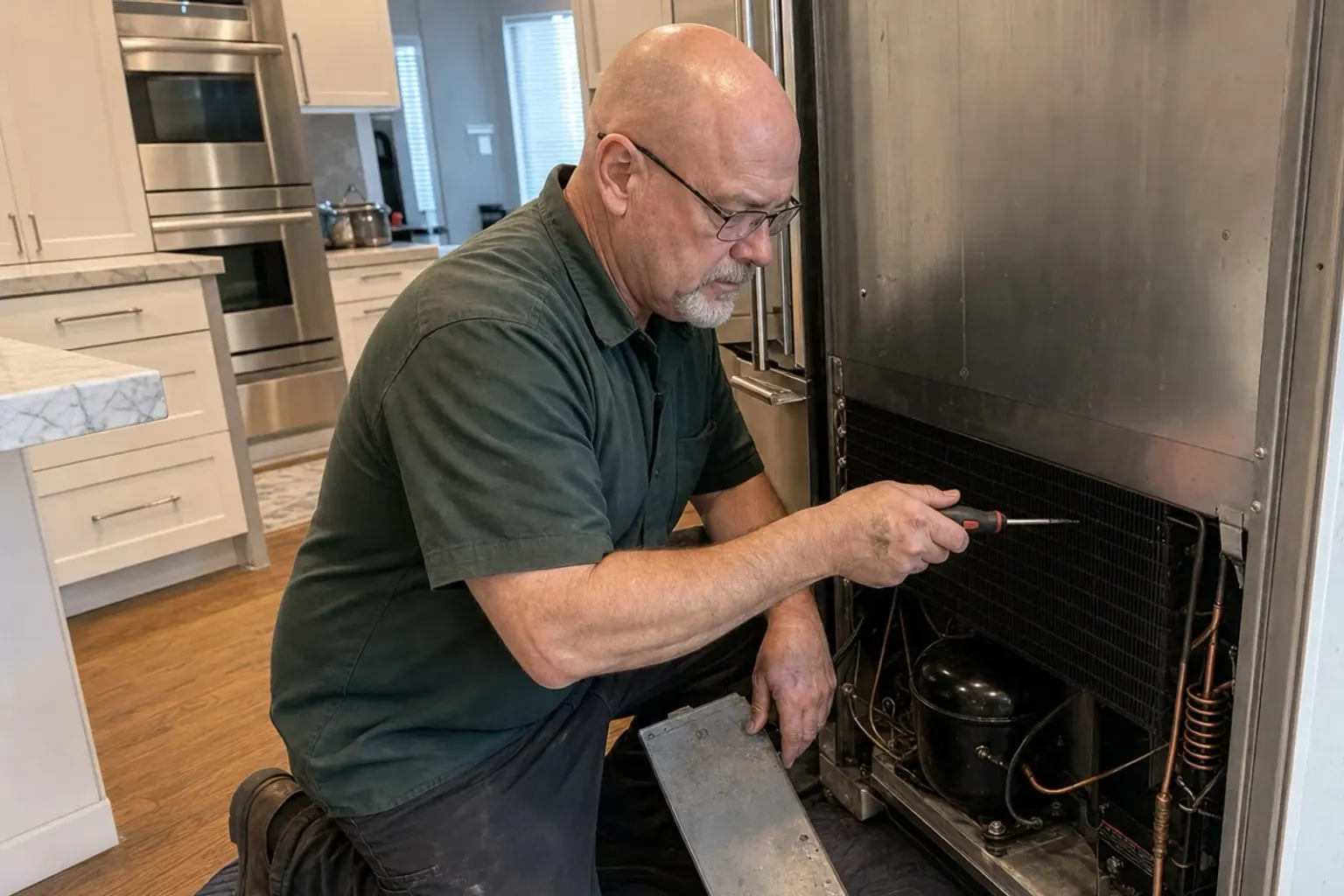
The sealed system is hermetically closed and pressurized. Diagnosing or repairing it requires recovering refrigerant and brazing lines, which by federal law must be done by an EPA-certified technician. This is not a DIY repair, but you can recognize the symptoms and rule out simpler causes before calling for service.
Signs of a Sealed System Failure
The most telling sign is a compressor that runs continuously yet the cabinet stays warm. You may notice the freezer climbing above 0 degrees F while the compressor never cycles off. Other clues include an unusually warm or silent compressor, frost forming on only part of the evaporator, or a hissing or gurgling sound that suddenly stops.
Because Sub-Zero uses a dual-compressor or dual-evaporator design in many models, it is common for one compartment to fail while the other stays cold. A fridge section that warms while the freezer holds temperature (or vice versa) can point to a sealed-system fault in just one circuit.
What Causes Sealed Systems to Fail
The three core causes are refrigerant leaks, compressor failure, and restrictions. A slow leak at a brazed joint or in the evaporator gradually lets refrigerant escape until there is too little to cool. A compressor can fail electrically (a bad start winding or relay) or mechanically (worn internals that no longer pump). A restriction, often moisture or debris forming a blockage at the capillary tube or drier, chokes refrigerant flow.
Age, prior repairs, and contamination all play a role. Moisture introduced during a past opening of the system is a frequent culprit behind restrictions, which is why clean, professional technique matters so much on these repairs.
Rule Out the Simple Causes First
Before assuming the worst, confirm the basics. Dirty condenser coils are the number one cause of a Sub-Zero that struggles to cool, and they mimic sealed-system symptoms. Clean the condenser (it is owner-safe) and make sure airflow around the unit is not blocked.
Also verify the unit is not in a defrost cycle, that the doors seal fully, and that the control panel is set correctly and not in a showroom or sabbath mode. If the unit still cannot cool after the coils are clean and airflow is good, a sealed-system diagnosis is warranted.
Why This Requires a Professional
Sealed-system work involves recovering and recharging refrigerant (such as R134a) and brazing copper lines under pressure. Handling refrigerant without EPA certification is illegal, and an improper repair can introduce moisture that ruins the system again. There are no safe DIY shortcuts here.
A qualified technician will measure pressures, locate leaks, recover refrigerant properly, replace failed components, evacuate the system to remove moisture, and recharge to the exact specified amount. As Sub-Zero refrigeration specialists in the Bay Area, we handle these repairs to factory specifications. Call (650) 668-1554 for an accurate diagnosis.
FAQ
Questions & answers
Is a sealed system failure worth repairing on a Sub-Zero?
Often yes. Sub-Zero units are built to last decades, and a professional sealed-system repair can extend that life significantly compared with replacing a premium built-in. A technician can tell you whether the specific failure is cost-effective to repair.
Can I add refrigerant to my Sub-Zero myself?
No. Refrigerant handling requires EPA certification by law, the system is sealed and pressurized, and simply adding refrigerant without finding the leak will not fix the problem and can cause further damage.
Why is only one compartment of my Sub-Zero warm?
Many Sub-Zero models use separate refrigeration circuits for the fridge and freezer. A sealed-system fault, fan failure, or defrost issue in one circuit can leave that compartment warm while the other stays cold.
Subzero Repair · Open 24/7 · 365-day warranty
Rather leave it to a specialist?
Call for urgent cooling or cooking failures, or book online for a service window across the Bay Area.