
Repair guide
Sub-Zero Evaporator Coil Leaks: Causes, Symptoms, and Repair
How to spot an evaporator coil refrigerant leak in a Sub-Zero, why it stops cooling, and why sealed-system leak repair requires a certified technician.
An evaporator coil leak is a sealed-system failure that lets refrigerant escape, so the fridge gradually or suddenly stops cooling, and repairing it requires an EPA-certified technician. The evaporator is the coil inside the unit that absorbs heat to keep the compartment cold; if it develops a leak, the refrigerant charge drops and cooling fails. This is not a DIY repair because it involves locating the leak, repairing or replacing the coil, evacuating the system, and recharging refrigerant to spec.
If you suspect an evaporator leak, the most useful thing you can do is recognize the symptoms early and call a specialist, since running a low or empty system can damage the compressor.
What the evaporator coil does
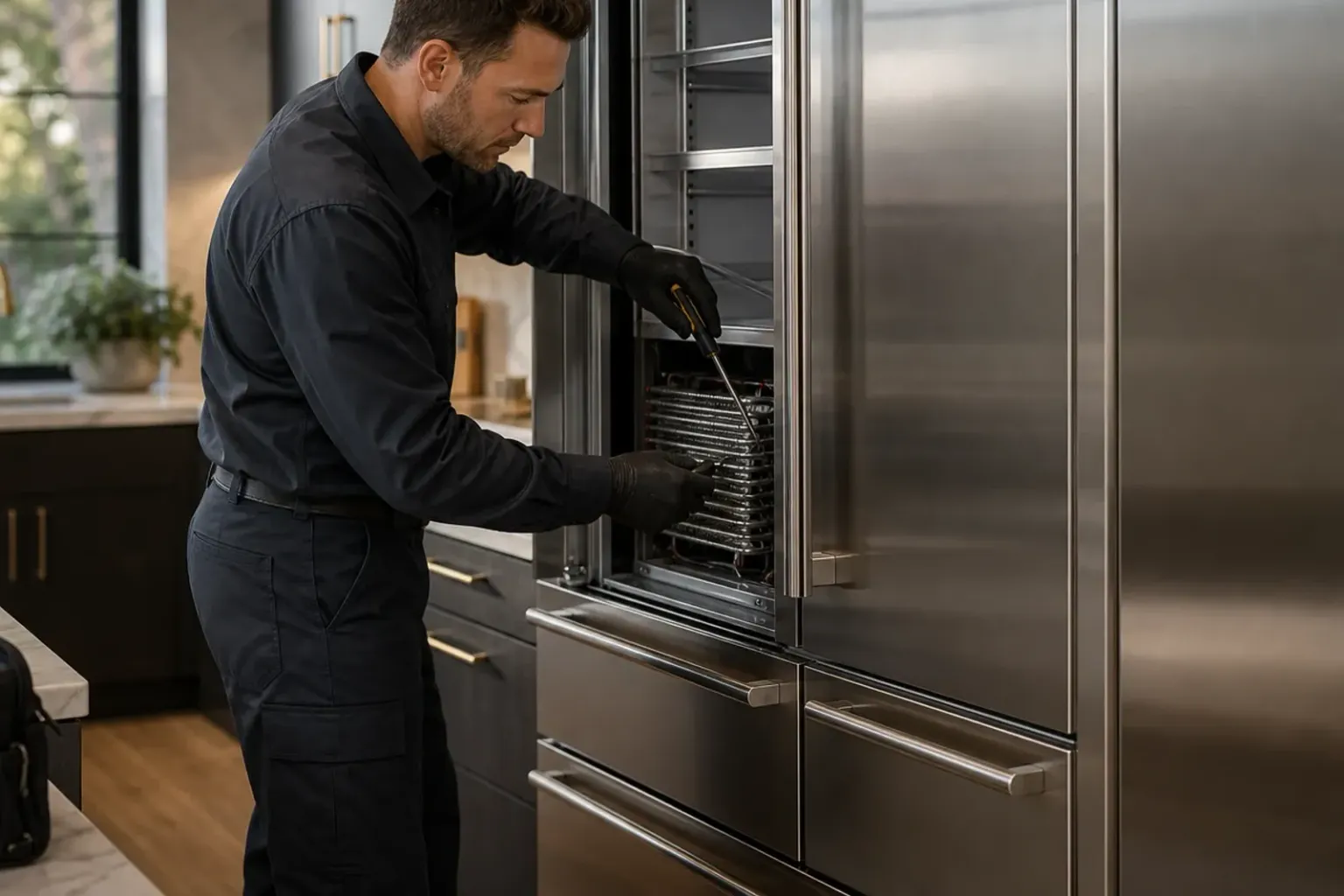
The evaporator coil sits inside the refrigerator and is where refrigerant absorbs heat from the compartment, producing the cold air a fan then circulates. It is part of the sealed refrigeration system, along with the compressor, condenser, and connecting lines.
Because it is sealed and pressurized, any breach lets refrigerant leak out. Once the charge is low, the system can no longer move enough heat, and cooling drops off even though the compressor may keep running.
Symptoms of an evaporator leak
The hallmark sign is a unit that runs but won't get cold, often with the compressor running constantly. You may see uneven cooling, frost forming in unusual patterns, or a complete loss of cooling that came on over days or weeks as refrigerant escaped.
These symptoms overlap with other faults such as a defrost problem or a failing fan, so the leak must be confirmed with proper leak-detection equipment. Owners typically cannot distinguish a refrigerant leak from other no-cooling causes without testing.
Why leak repair is professional-only
Repairing an evaporator leak means recovering any remaining refrigerant, finding the leak with electronic or dye detection, repairing or replacing the coil (often involving brazing), pulling a deep vacuum to remove moisture, and recharging with the exact refrigerant charge. EPA Section 608 requires certification to handle refrigerant.
Attempting this without the right equipment leads to contamination, repeat leaks, or compressor damage. We handle evaporator and sealed-system repairs as specialists in Sub-Zero and premium built-in refrigeration.
What to do if you suspect a leak
Stop relying on the unit for critical food storage and call a technician promptly. Running a system that is low on refrigerant makes the compressor work hard with poor lubrication and cooling, which can turn a coil repair into a much larger one.
Note what you have observed: when cooling started failing, whether it was gradual, and any frost or noise changes. Do not add refrigerant or sealant yourself; over-the-counter stop-leak products can contaminate the system and complicate proper repair.
FAQ
Questions & answers
How do I know if my evaporator coil is leaking refrigerant?
The main sign is a unit that runs but won't cool, often gradually losing cooling over days, sometimes with constant compressor operation or unusual frost. Confirmation requires professional leak detection, since other faults cause similar symptoms.
Can an evaporator coil leak be repaired?
Yes, by a certified technician. It involves recovering refrigerant, locating and repairing or replacing the coil, evacuating the system, and recharging to spec. It is not a DIY repair under EPA rules.
Is it safe to keep using a fridge with a refrigerant leak?
No. Running a system low on refrigerant can overheat and damage the compressor, turning a coil repair into a far costlier one. Stop relying on it for food storage and call a technician.
Subzero Repair · Open 24/7 · 365-day warranty
Rather leave it to a specialist?
Call for urgent cooling or cooking failures, or book online for a service window across the Bay Area.