
Repair guide
Built-In Refrigerator Repair: What to Know Before You Call (Sub-Zero & Premium Brands)
How built-in fridge repair differs from standard units, what owners can safely fix, what needs a pro, and how to prep for service. Bay Area Sub-Zero specialists.

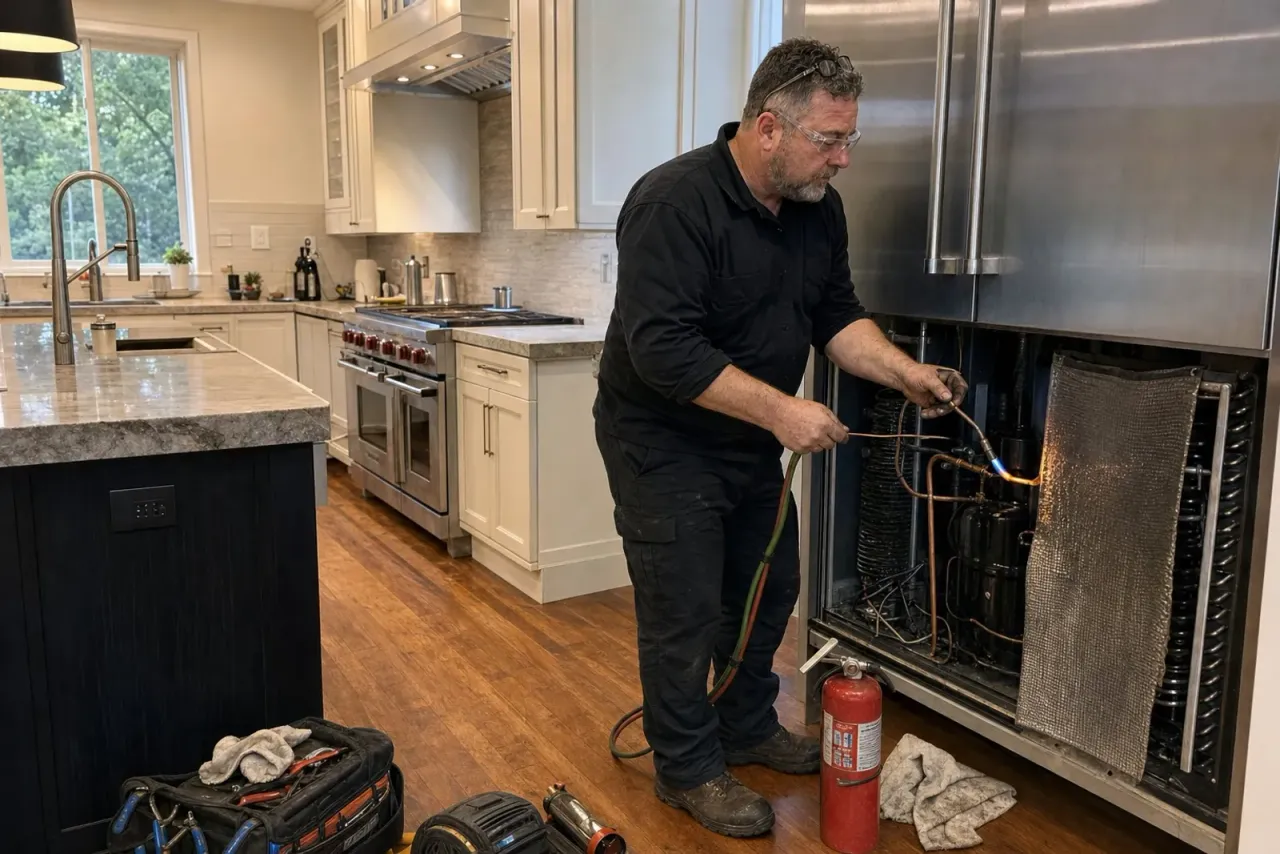
Built-in refrigerators like Sub-Zero are repairable far longer than standard fridges, and most problems trace to one of a few causes: dirty condenser coils, a tripped or confused control board, worn door gaskets, or a sealed-system fault. Owner-safe maintenance (cleaning coils, checking gaskets, resetting the panel) resolves a surprising share of "my fridge is warm" calls, while compressor, refrigerant, and electrical work require a trained technician.
Because built-in units are integrated into cabinetry and use dual-compressor or specialized cooling designs, repair almost always makes more financial sense than replacement. A unit installed in 2005 can still be running well past 2025 with correct service. The key is matching the symptom to the right fix and knowing where DIY safely ends.
Why built-in repair is different from standard fridges
Premium built-in refrigeration is engineered to last 20 years or more, so component-level repair is expected rather than disposable. Many models use two separate cooling systems (one for fresh food, one for the freezer), magnetic-induction or microprocessor controls, and tight cabinet integration that affects airflow and serviceability.
That design means a warm compartment on one side does not necessarily indicate total failure. It often points to a single subsystem: a fan, a defrost component, a sensor, or restricted condenser airflow. Diagnosing the right subsystem is what separates an inexpensive fix from an unnecessary part swap.
What owners can safely do themselves
Several high-impact tasks are fully owner-safe and need no tools beyond a vacuum and a soft brush. Cleaning the condenser coils every 6 to 12 months is the single most valuable thing you can do; clogged coils cause warm temperatures, longer run times, and premature compressor stress.
You can also inspect and clean door gaskets, confirm the unit is level so doors seal and close on their own, replace the water filter on schedule, and perform a control-panel reset to clear a glitchy display. None of these involve refrigerant or live electrical components.
What requires a professional technician
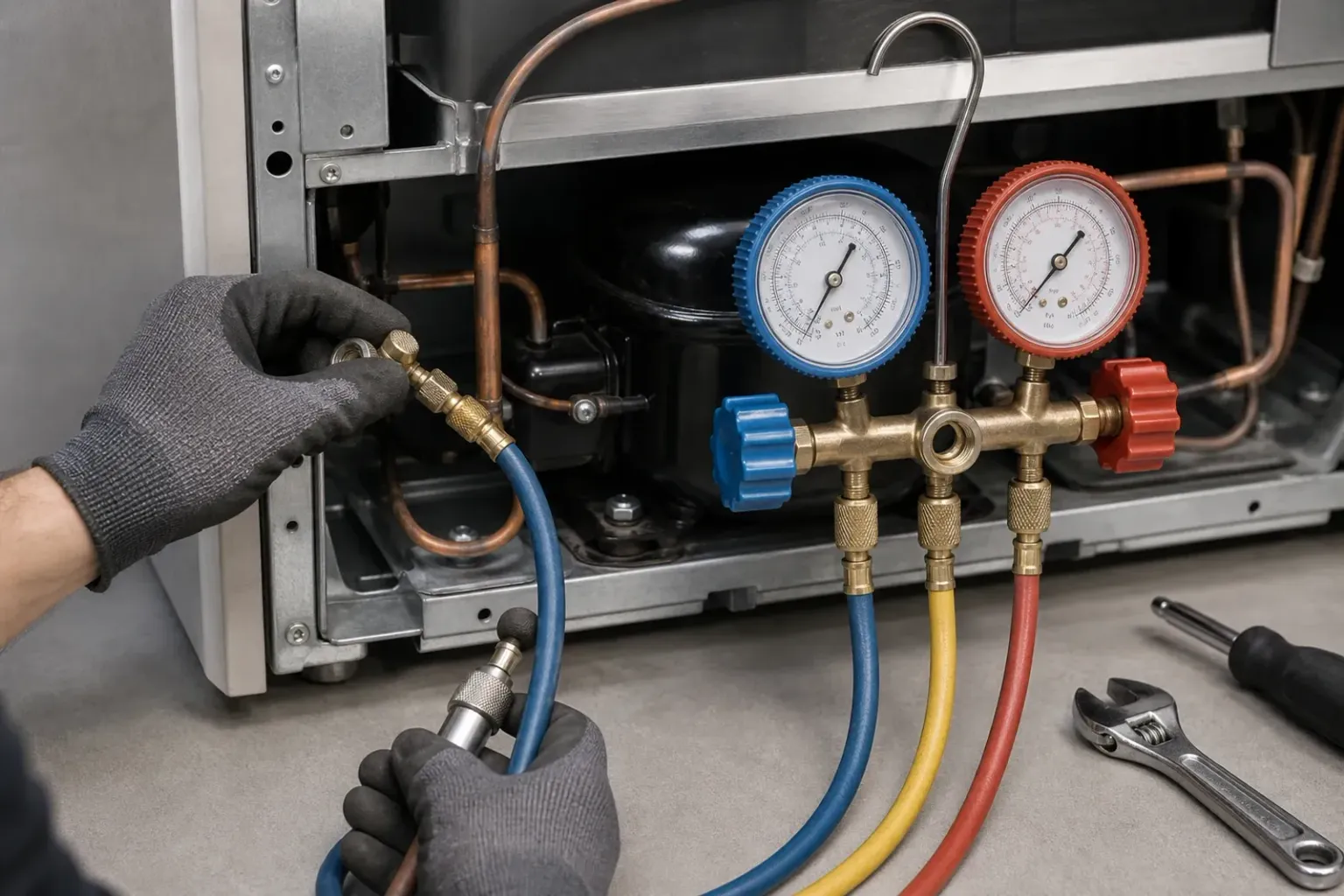
Anything touching the sealed refrigeration system is off-limits for DIY. That includes refrigerant (often called freon or R134a) handling, recharging, compressor replacement, evaporator or condenser coil leaks, and capillary or filter-drier work. U.S. EPA Section 608 law requires certified technicians to handle refrigerant, and improper work can permanently damage the system or void coverage.
Electrical repairs, control-board replacement, and sealed-system diagnostics also call for a pro with the right gauges, leak detection, and OEM parts. As specialists in Sub-Zero and premium built-in refrigeration since 2005, we handle these safely and correctly.
How to prepare for a service visit
Before calling, note the model and serial number (usually on a plate inside the fresh-food compartment near the top or on the toe-grille area), the exact symptom, any error codes shown, and how long it has been happening. Photos of the display and the unit help.
Clear access to the front grille and the area around the unit. If a section is warm, leave it as-is rather than unplugging repeatedly, since intermittent power cycling can mask the fault. Good notes shorten diagnosis and often reduce the total cost of repair.
FAQ
Questions & answers
Is it worth repairing a built-in refrigerator?
Usually yes. Built-in units like Sub-Zero are built for 20-plus years of service, and most failures are single components rather than the whole system. Repair is typically far less expensive than replacing an integrated, cabinet-matched unit.
How long do built-in refrigerators last?
With routine maintenance such as coil cleaning and gasket care, 20 years or more is common, and many units run well beyond that. Sealed-system service when needed can extend life further.
Can I fix a warm built-in fridge myself?
Sometimes. Cleaning the condenser coils, checking the door gasket seal, and resetting the control panel resolve many warm-fridge cases. If those do not help, it may be a fan, defrost, sensor, or sealed-system issue that needs a technician.
Subzero Repair · Open 24/7 · 365-day warranty
Rather leave it to a specialist?
Call for urgent cooling or cooking failures, or book online for a service window across the Bay Area.